Global sustainability discussions are shifting from target-setting to verifiable execution, and the transportation energy system is becoming a critical entry point for measurable emissions reduction. For Hyperchain Technology, this is an important pathway within its commitment to sustainability. The blockchain-based battery swap management platform serves as an effective approach to increasing the adoption and utilization of clean urban energy.
In this application, Hyperchain deploys its self-developed blockchain IoT data gateway to ensure trusted collection of battery data. Combined with blockchain-based lifecycle recording and traceability, the platform builds a reliable energy data framework that supports standardized battery management, intelligent station operations, and data-driven asset evaluation. It enables quantifiable carbon accounting for fleet electrification, advances battery asset banking models, supports vehicle-battery decoupling to lower acquisition costs, and accelerates the adoption of new energy vehicles, contributing to carbon peak and neutrality goals in the battery swapping sector.
The first large-scale implementation took place in Anji County, a small city in northern Zhejiang Province. In collaboration with Zhejiang Petroleum, Hyperchain deployed a blockchain-enabled battery swap station that allows electric taxis to replace batteries within five minutes instead of waiting for lengthy charging. This significantly reduced operating costs for the local taxi fleet, improved vehicle availability, and extended the service life of power batteries.
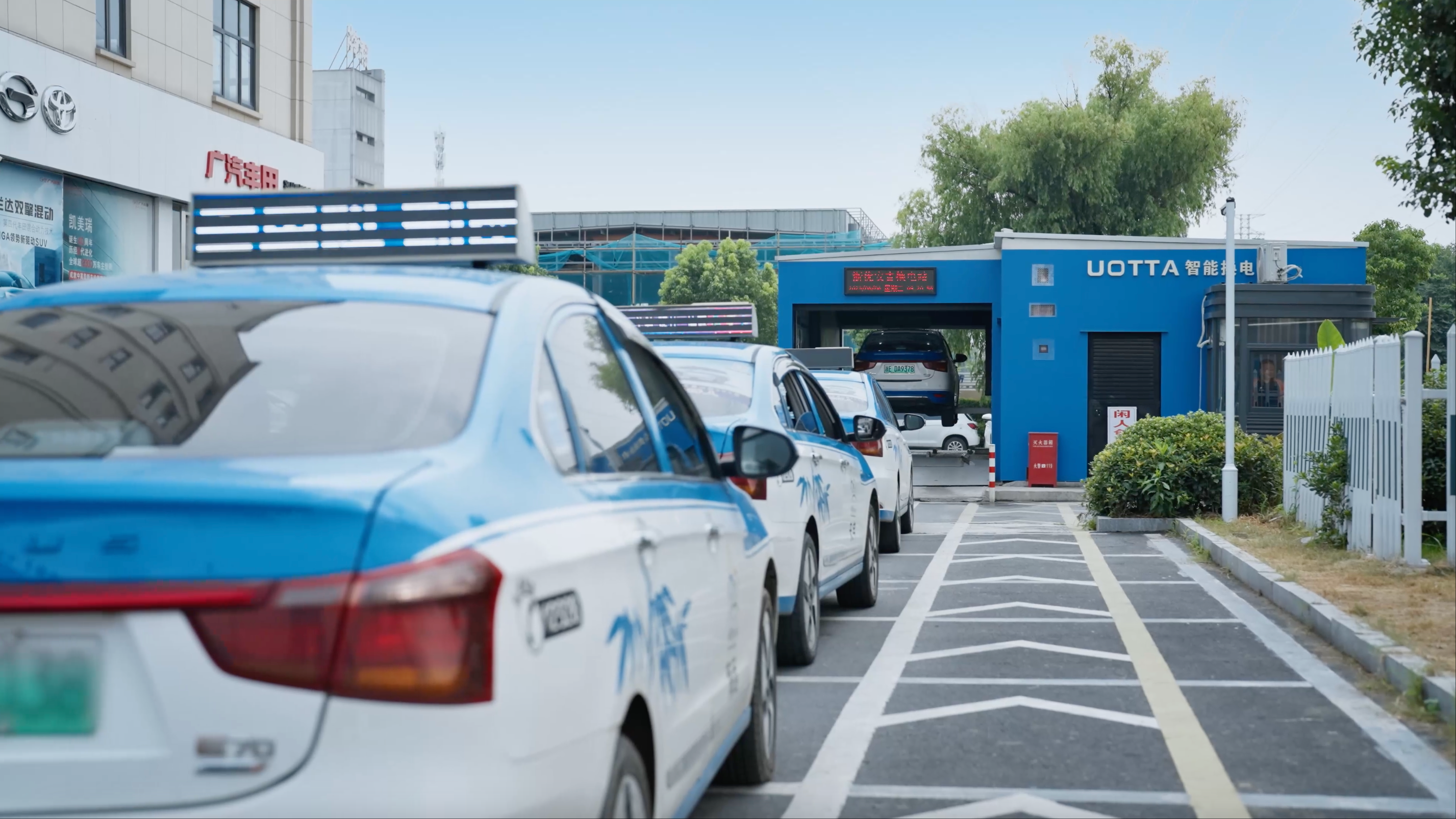
To meet the practical needs of automotive manufacturers and battery swap operators, the platform provides an end-to-end trusted data solution covering the entire process from energy data acquisition to on-chain storage. The capability originates from Hyperchain’s proprietary blockchain IoT data gateway, which can be integrated into charging infrastructure, swap vehicles, or battery modules. The device reads data from the CAN bus and transmits it securely through cellular communication to the blockchain backend, ensuring authenticity, integrity, and tamper-resistance throughout the lifecycle.
The platform also establishes a trusted mechanism for ecosystems involving multiple stakeholders such as investors, operators, and battery asset institutions. Through on-chain signatures and verifiable data collection, it ensures the reliability of operational data and revenue distribution, supporting asset management, performance evaluation, and data sharing across the full cycle. The technology has been granted multiple invention patents.
In Anji, after thirty-eight months of operation, the project generated over RMB 4.8 million in revenue, completed more than 140,000 battery swaps, and delivered a cumulative energy output exceeding 3010 MWh, demonstrating a clear and sustainable commercial model.
Building on this success, the platform has been deployed in multiple cities across China, enhancing urban power safety, intelligent vehicle operations, and energy network management. It continues to support sustainable development by transforming technology into a practical driver of low-carbon urban growth.